

close
Choose Your Site
Global
Social Media
Views: 0 Author: Site Editor Publish Time: 2026-05-08 Origin: Site


Heavy equipment acquisition represents a critical capital allocation event for any construction firm. Purchasing a brand-new machine carries a steep initial depreciation penalty. Conversely, buying pre-owned equipment carries distinct risks. You might inherit hidden mechanical failures from previous owners. A successful acquisition balances upfront capital savings with predictable long-term financial outcomes. This careful balance ensures your new asset hits the ground running immediately. Catastrophic downtime can erase initial purchase savings overnight.
This guide provides an evidence-based framework for evaluating machinery. It helps you inspect, source, and secure reliable heavy equipment. You will learn how to align mechanical specifications directly to your specific job site constraints. We cover detailed inspection protocols and smart sourcing strategies. Ultimately, you will acquire high-performing machinery confidently while protecting your operating budget.
Avoid the Depreciation Cliff: High-quality used equipment bypasses the initial 20%–30% depreciation seen in the first two years of a new machine’s life.
Site Dictates Specs: Do not buy based on tonnage alone; reverse-engineer your selection based on soil conditions, spatial limits, and required hydraulic flow.
Trust the ECM, Not the Dash: Always verify operating hours through the Engine Control Module (ECM) to avoid tampered meters.
Dynamic Testing is Mandatory: Cold starts and hydraulic stall tests reveal internal wear that static visual inspections miss.
Buyers often fixate heavily on initial sticker prices. However, long-term operating expenses dictate actual profitability. You must evaluate the mathematical advantage of depreciation. New machinery loses roughly 20% to 30% of its value rapidly. This drastic drop occurs within the first 24 to 36 months of operation. Buying a slightly older model bypasses this sharp depreciation curve entirely. You retain valuable capital for other pressing business investments.
You must map hidden operating variables meticulously. Shift your focus away from the purchase invoice. Evaluate daily running costs instead. Estimate fuel consumption accurately across different working modes. Modern eco-modes save significant fuel compared to older engines. Factor in annual insurance premiums carefully. Include storage overhead and routine maintenance buffers. Calculate operator hourly rates properly to understand total project expenses.
Understand the critical difference between refurbished units and "as-is" purchases. A certified refurbished machine offers extensive mechanical upgrades. Technicians replace hydraulic seals systematically. They rebuild weak engine components completely. This option carries a slightly higher upfront price tag. However, it significantly lowers unexpected maintenance bills later. "As-is" auction purchases pose much higher financial risks. They often hide expensive structural defects.
Financial Impact: New vs. Pre-Owned Equipment | ||
Financial Metric | Brand New Machine | Pre-Owned Machine (3-5 Years) |
|---|---|---|
Initial Depreciation | Loses 20-30% within 24 months | Major depreciation already absorbed |
Upfront Capital Required | Extremely high burden | Significantly lower barrier |
Insurance Premiums | Premium rates based on high replacement value | Lower rates based on depreciated value |
Apply a strict application engineering framework during selection. Stop relying on generic size classifications. Mini versus large labels rarely tell the whole story. Evaluate your equipment needs based on specific environmental limitations.
Soil and terrain conditions dictate your undercarriage choices. Hard rock demands extremely high breakout force. You need robust breaker compatibility for quarry work. Soft ground requires wider rubber tracks. Tiltrotators also help minimize ground bearing pressure effectively. Marshy environments swallow heavy steel tracks quickly.
Space constraints limit machine dimensions strictly. Urban infrastructure projects pose unique maneuvering challenges. Indoor demolition worksites lack adequate turning room. These restricted environments necessitate zero tail-swing (ZTS) models. Compact footprints prevent accidental property damage during complex rotations. Reduced tail-swing designs keep operators safe near busy traffic lanes.
Reach and depth requirements dictate specific arm configurations. Deep utility trenching requires long-reach setups. Heavy material handling needs massive lifting capacity. Stability becomes paramount during heavy pipeline lifts. Standard arms fail completely in deep foundation projects.
Environmental hazards influence component selection heavily. Quarries generate immense abrasive dust daily. Demolition sites release harmful microscopic particulates. These high-dust environments require reinforced air filtration systems. Standard filters choke and destroy engines rapidly under these conditions.
Site-Specific Equipment Configuration Chart | ||
Job Site Environment | Primary Constraint | Recommended Machine Specification |
|---|---|---|
Urban Demolition | Tight spatial limits | Zero Tail-Swing (ZTS), compact footprint |
Quarries & Mining | Abrasive rock, high dust | Reinforced filtration, high breakout force |
Marsh or Soft Soil | Low ground bearing pressure | Wide rubber tracks, lightweight frame |
Deep Utilities | Vertical depth reach | Long-reach arm configuration |
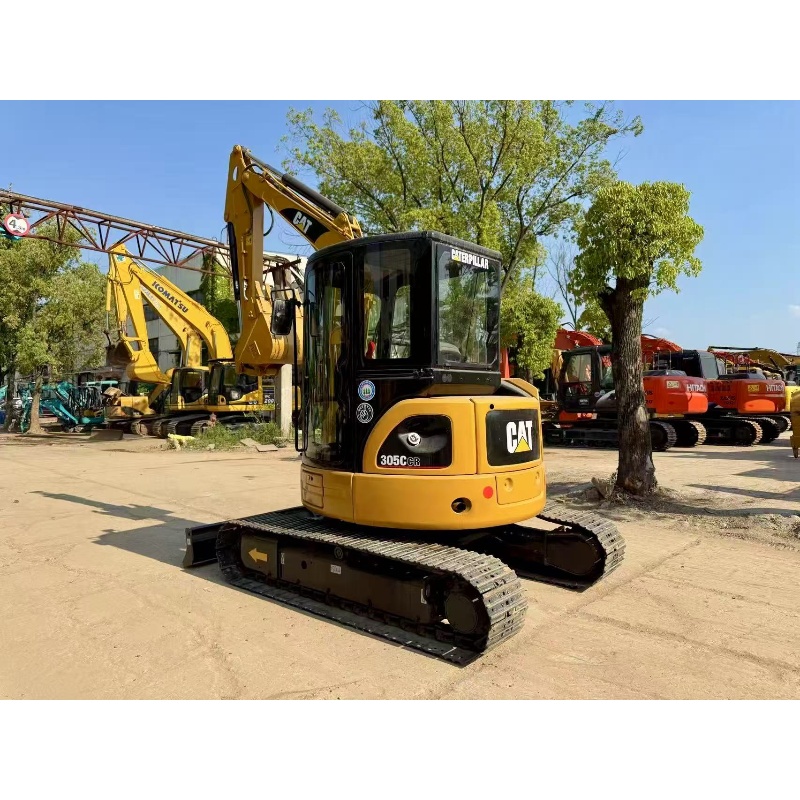
Visual inspections alone leave buyers vulnerable. You must execute a multi-phase mechanical evaluation. Follow this structured framework to uncover hidden wear. A high-quality Used Excavator should pass these checks easily.
Phase 1: Structural and External Indicators. Inspect the main frame closely. Look for non-factory field welds everywhere. Check for stress fractures along the boom. Examine the stick thoroughly. These defects indicate a severe history of overloading. Assess the undercarriage carefully. Look for worn sprocket teeth. Measure the track pad height accurately. Search for oil mixed into dirt around final drives. This oily mixture is a primary indicator of failing seals. Check the slew ring (swing bearing) for excessive play. A loose swing bearing represents a notoriously expensive repair blind spot.
Phase 2: Internal Verification (The Cold Start). Insist on a completely cold engine start. Warm engines easily hide major combustion problems. Evaluate the exhaust smoke color immediately upon ignition. Blue smoke indicates burning oil inside the cylinders. Black smoke points to unburned fuel or bad injectors. White smoke suggests a serious coolant leak or head gasket failure. Demand a printed data report next. Pull this directly from the Engine Control Module (ECM). This verifies true operating hours and historical run states. It effectively neutralizes the risk of rolled-back dashboard meters.
Phase 3: Dynamic Performance (The Stall Test). Execute a rigorous hydraulic stall test. Apply medium hydraulic pressure against an immovable object. Do not force it recklessly. This test evaluates engine and hydraulic pump stability simultaneously. The system runs under maximum load safely. Listen closely for sudden RPM drops. Whining pumps indicate severe internal wear. Relief valve squeals signal impending pressure failures. Stable RPMs prove strong internal mechanics.
Treat the base machine strictly as a pure power unit. The excavator is merely a physical delivery mechanism. The hydraulic attachment acts as the actual tool. You must evaluate hydraulic capabilities closely before buying.
Hydraulic flow compatibility remains absolutely critical. Match the machine's auxiliary hydraulic flow accurately. Compare gallons per minute (GPM) ratings carefully. Ensure operating pressures align correctly. Mismatched attachments will perform poorly. They can also damage the host machine permanently.
Build a robust attachment return-on-investment ecosystem. One single machine can replace multiple specialized assets easily. You simply swap tools on the job site. This flexibility maximizes operational profitability rapidly.
Crusher-Screener Buckets: Use these tools for on-site material recycling. They turn concrete debris into usable aggregate instantly. You eliminate expensive haul-away fees completely.
Steel Shears and Breakers: Deploy these attachments for high-impact demolition. They slice through heavy rebar effortlessly. They crush thick concrete foundations easily.
Quick Couplers: Install these devices to reduce transition times. Operators switch between digging and compacting tasks rapidly. They never leave the safety of the cab.
Vetting the source prevents massive financial losses. Compare various marketplace risk profiles carefully. Online classifieds offer broad selections cheaply. Unreserved auctions provide extreme discount opportunities. However, these venues carry immense mechanical risks. Authorized dealer networks provide greater transactional safety. They inspect their inventory thoroughly before listing.
Working directly with a specialized Used Excavator manufacturer brings major advantages. You gain immediate access to factory-trained technicians. Original Equipment Manufacturer (OEM) parts remain highly available. These certified suppliers frequently offer solid powertrain warranties. A 30, 60, or 90-day guarantee offers tremendous peace of mind. They stand behind their refurbishment processes fully.
Remote buying demands strict operational best practices. Cross-border purchases involve significant logistical hurdles. Interstate transactions require careful planning. Hire third-party inspection services always. Companies like SGS provide unbiased equipment reports remotely. Verify Tier 4 emission compliance beforehand. Non-compliant engines face strict regulatory bans in many jurisdictions. Finalize transport logistics only after clearing these regulatory hurdles.
Acquiring heavy equipment demands analytical rigor. Validate the underlying financial logic first. Match the machine directly to the harshest site conditions possible. Inspect the internal mechanics ruthlessly using dynamic testing. This multi-layered approach protects your capital budget effectively.
Take specific action steps moving forward. Request ECM reports from your seller today. Organize an independent mechanic immediately. Perform the hydraulic stall test personally before negotiating. Calculate your comprehensive lifecycle financial model thoroughly. Do these things before submitting any formal purchase offer.
A: Sub-5,000 hours represents the sweet spot for maximum remaining life. Machines having 5,000 to 8,000 hours are standard but require thorough maintenance reviews. Past 10,000 hours, buyers must budget for major powertrain overhauls. Internal components naturally degrade at this stage. Always balance the hour meter against documented service history.
A: Yes. Equipment financing, traditional bank loans, and rent-to-own structures remain widely available. Lenders evaluate multiple variables during the approval process. They factor in the machine's age and operating hours. Dealer origins often secure better rates than unreserved auction purchases. Strong credit profiles easily offset older equipment risks.
A: "As-is" machines are sold in their exact current state. Buyers assume all inherent mechanical risks immediately. Conversely, refurbished units undergo systematic rebuilding processes. Technicians often replace hydraulic seals, undercarriage components, and vital fluids. Refurbished machinery typically includes a limited warranty. This provides buyers significant peace of mind and operational predictability.


