

close
Choose Your Site
Global
Social Media
Views: 0 Author: Site Editor Publish Time: 2026-06-30 Origin: Site


The 20-ton class remains the undisputed backbone of general construction, road building, and earthmoving projects globally. Buyers narrowing their shortlist to the CAT 320 and the Komatsu PC200 face a significant dilemma. They must choose between two legendary machines known for exceptional reliability. Choosing the wrong machine for a specific application can bleed project margins through excessive fuel costs or unexpected downtime. Both machines stand out as highly proven performers on paper. However, when navigating the secondary market, your decision must shift radically. You must move away from glossy brochure specifications and look closely at long-term operating expenses, maintenance history, and specific daily demands. A poorly maintained excavator will drain your budget fast, regardless of the badge on the side. We will examine exactly how these machines compare in raw power, efficiency, and cab ergonomics. You will learn how to make a confident, data-backed choice for your next acquisition.
Power vs. Efficiency: CAT 320 generally excels in raw breakout force and heavy material handling, while the Komatsu PC200 is widely favored for hydraulic speed, cycle times, and fuel economy.
Used Market Reality: A machine's maintenance history and undercarriage condition override brand reputation.
Resale & Support: CAT retains a slight edge in absolute residual value, but Komatsu's parts availability and cost-effective maintenance level the playing field for long-term operators.
Decision Driver: Project type (heavy excavation vs. high-cycle loading) and local dealer network density should dictate your final choice.
Defining what a successful Used Excavator acquisition looks like requires looking beyond the fresh paint on a dealer's lot. True success means maximizing daily uptime, minimizing the cost-per-ton of material moved, and strictly avoiding catastrophic hydraulic or engine failures. We must evaluate these assets through a strict financial lens. Transition your focus away from the upfront purchase price and drill down into the lifetime operating costs. We operate under the assumption that both machines will easily perform the same basic tasks, such as trenching, grading, and loading trucks. Yet, they impact your monthly balance sheet quite differently depending on how they consume fuel and wear through ground-engaging tools.
You must prioritize the actual condition over the brand name. Establish a skeptical baseline when evaluating any heavy machinery. No amount of superior brand engineering can save a machine running on contaminated hydraulic fluid or operating with a hairline crack in the boom. Demand comprehensive fluid analysis reports and detailed undercarriage measurements. Evaluating the real-world wear allows you to protect your capital. A neglected premium brand always costs more to run than a well-maintained alternative.
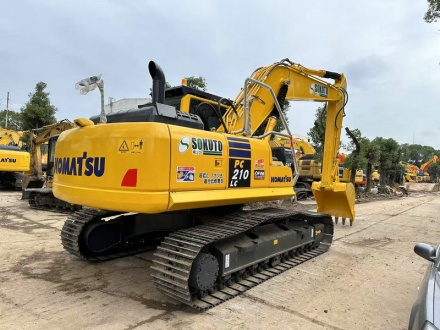
When you put these machines in the dirt, their differing engineering philosophies become immediately apparent. You must match the machine's primary strength to your dominant soil conditions.
The Caterpillar 320 sets the standard for heavy-duty applications. It delivers noticeably higher torque and superior breakout force when you encounter hard-pan soil, dense clay, or rocky conditions. The structural durability remains exceptional. The boom and stick are heavily reinforced to handle the massive stress of prying out stubborn boulders or ripping frost. However, these substantial strengths introduce specific trade-offs. You will typically experience higher fuel burn rates compared to equivalent Komatsu models. Moving that extra structural weight and pushing the hydraulic pumps to maximum pressure requires significant energy. If your daily operations demand raw, unrelenting power, this machine handles the abuse effortlessly.
The Komatsu PC200 thrives in completely different environments as a high-cycle specialist. It utilizes advanced hydraulic system synchronization, often referred to as closed-center load sensing. This technology allows for incredibly smooth multi-functioning. Operators can swing, lift, and curl the bucket simultaneously without dropping speed. It delivers superior fuel efficiency and notably faster swing cycle times. You will find it unmatched for continuous trenching operations or rapid truck loading. The primary trade-off occurs in severe applications. Operators sometimes note the machine can feel slightly lighter in heavy prying situations compared to the CAT. It prefers speed and finesse over brute force.
We strongly advise looking at realistic, evidence-oriented fuel burn averages rather than manufacturer claims achieved under ideal testing conditions. In typical moderate earthmoving tasks, a CAT 320 might consume between 4.5 and 5.5 gallons (17 to 20 liters) per hour. A comparable Komatsu PC200 frequently averages 3.5 to 4.5 gallons (13 to 17 liters) per hour doing the exact same work. Over a heavy season spanning 1,500 hours, that difference translates into thousands of gallons saved, drastically improving your profit margins.
A machine spends its life costing you money in parts, labor, and depreciation. Understanding how these two brands behave long-term helps you build an accurate operating budget.
Caterpillar dominates with a truly ubiquitous aftermarket parts network. Heavy equipment mechanics globally know exactly how to work on a 320. You will rarely struggle to locate specialized tooling, diagnostic software, or an experienced technician. While OEM parts often come at a premium, the vast aftermarket ecosystem helps mitigate those costs effectively.
The Komatsu reality centers on highly reliable proprietary components. They manufacture their engines and hydraulic pumps in-house, ensuring absolute synergy between systems. This integration typically leads to fewer premature component failures. Sometimes, sourcing specific OEM parts can face minor supply chain delays depending on your geographic region. However, aftermarket options continue to grow incredibly robust. Routine maintenance items like filters, hoses, and seal kits remain widely available and highly affordable for both brands.
You must address the widely recognized CAT premium when evaluating depreciation. Caterpillar machines generally demand a higher upfront investment on the secondary market. However, they consistently retain higher absolute residual value when you decide to sell them later. This makes them highly attractive if you cycle your fleet every three to five years.
Conversely, frame the Komatsu as a potentially better long-term investment if you intend to run the machine to the absolute end of its lifecycle. When you calculate the lowest cost-per-hour over 10,000 or 12,000 hours, the daily fuel savings compound massively. The machine pays for itself through steady, highly efficient operation.
Evaluation Metric | CAT 320 | Komatsu PC200 |
|---|---|---|
Primary Strength | Breakout force, structural rigidity | Cycle speed, multi-function smoothness |
Fuel Efficiency | Moderate (higher fuel burn per hour) | Excellent (lower fuel burn per hour) |
Resale Curve | Flatter, retains high market value | Steeper initial drop, excellent lifetime value |
Your operators hold the key to productivity. A tired or frustrated operator moves significantly less dirt per shift, slowing down the entire project.
Drawing on typical voice-of-customer feedback reveals stark contrasts in cab design. Operators frequently praise the CAT 320 for its wide spaciousness. The heavy controls feel intuitive and robust, perfectly matching the machine's powerful personality. The climate control systems generally excel in extreme temperatures. On the other hand, the Komatsu PC200 is heavily praised for its smooth, low-fatigue joystick feedback. The short-throw levers require minimal wrist effort. This translates directly to reduced operator fatigue during ten-hour shifts involving constant swinging and loading.
You must carefully navigate the realities of Tier 3 versus Tier 4 engines in the secondary market. Models like the CAT 320D and the Komatsu PC200-8 remain incredibly sought after. They offer a perfect balance of modern hydraulic performance without complex exhaust treatments. Newer models introduce complex DPF (Diesel Particulate Filter) and DEF (Diesel Exhaust Fluid) systems. These systems present significant adoption risks. They frequently require forced regenerations, stalling work entirely. They also introduce sensitive sensors prone to failure in harsh, dusty environments. Many seasoned contractors explicitly prefer older, pre-emissions used models to ensure uninterrupted reliability.
You must acknowledge strong operator bias exists on every job site. Forcing a die-hard CAT operator into a Komatsu cab, or vice versa, can temporarily reduce daily productivity. The subtle differences in swing speed, pedal placement, and lever resistance take time to master. Managing this transition carefully, and allowing operators adequate time to adapt, prevents short-term delays in your production schedule.
Creating a solid shortlisting logic prevents emotional buying decisions. You need to match the iron to the exact application before writing a check.
Consider the following scenarios to guide your choice:
Choose the CAT 320 if: The project heavily involves quarry work, ripping hard compacted soil, or requires maximum breakout force. It is also the ideal choice if you plan to resell the machine within three to five years and want to maximize your return.
Choose the Komatsu PC200 if: The project involves continuous, high-volume trenching, utility installations, or rapid truck loading. It is the definitive choice if minimizing your daily fuel expenditure serves as your primary profit driver.
The role of your equipment supplier cannot be overstated. Vetting your Used Excavator supplier is just as critical as vetting the manufacturer. Look for transparent partners who offer comprehensive fluid analysis reports covering engine oil, coolant, and final drives. Demand detailed undercarriage inspection reports measuring the remaining life of track links, rollers, and sprockets. Look for documented, transparent service histories. A reputable supplier eliminates the guesswork and ensures you buy a machine ready to hit the dirt on day one.
Summarizing this comparison reveals no universal "better" machine. We only see the right machine tailored to specific operational goals. The CAT 320 delivers raw power and premium resale value, while the Komatsu PC200 dominates in fuel efficiency and smooth cycle times.
Your next steps require practical diligence.
Stop comparing generic spec sheets and start pulling active fluid samples from potential purchases.
Have a trusted mechanic measure the slew ring tolerance and undercarriage wear.
Calculate your estimated annual fuel costs based on realistic burn rates rather than optimal claims.
Confirm the availability of replacement parts within your specific operating region.
Take action by consulting an experienced dealer who understands your project demands deeply. Request comprehensive inspection reports for any unit you consider. We invite you to view our current, carefully vetted inventory and find the right Used Excavator to keep your upcoming projects running smoothly and profitably.
A: The ideal sweet spot typically rests between 5,000 and 8,000 hours. At this stage, machines still offer substantial working life but demand a significantly lower initial investment. You must prioritize documented maintenance over raw hours. A meticulously serviced 8,000-hour excavator will easily outlast a severely neglected 4,000-hour machine.
A: Genuine OEM Caterpillar parts often carry a higher premium compared to Komatsu components. However, both brands benefit from massive, highly competitive aftermarket parts networks. These robust aftermarket options effectively drive down routine repair costs, keeping regular maintenance highly manageable regardless of which brand you ultimately select.
A: The CAT 320D and the Komatsu PC200-8 remain incredibly popular and highly reliable in the secondary market. Buyers actively seek them out for their excellent balance of robust hydraulic power and pre-complex emissions engineering. They lack sensitive DPF and DEF systems, ensuring greater daily uptime in harsh conditions.
A: You should immediately check for excessive slew ring play when rotating the cab. Listen closely for any abnormal hydraulic pump whine when operating under load. Finally, measure the undercarriage wear thoroughly, paying close attention to the sharpness of the sprockets, the thickness of the idlers, and track link tension.


