

close
Choose Your Site
Global
Social Media
Views: 0 Author: Site Editor Publish Time: 2026-05-06 Origin: Site


Procuring heavy machinery requires strategic foresight and rigorous market analysis. Purchasing a Used Grader significantly reduces initial capital expenditure. It also minimizes the steep depreciation risks associated with brand-new equipment. However, finish grading demands extreme mechanical precision across every pass. Compromised machinery inevitably leads to costly rework, blown project tolerances, and crippling downtime.
Evaluating long-term operational costs over pure budget hunting is absolutely critical for project success. You must rigorously validate wear-heavy components, verify service history, and mitigate hidden legal liabilities. Surface-level inspections simply cannot uncover foundational mechanical flaws.
This guide provides an engineering-aligned evaluation framework. You will learn how to vet the secondary market effectively. We will help you shortlist equipment guaranteeing maximum operational reliability and protect your project margins.
Define Application Constraints: Match grader size, articulation type, and emissions compliance (e.g., Tier 4 Final) strictly to project scopes.
Audit Critical Wear Points: Precision is dictated by the condition of the circle, moldboard, and frame alignment. Surface-level inspections are insufficient.
Verify the Paper Trail: Gaps in service history, missing ownership documentation, or outstanding liens are non-negotiable walk-away signals.
Evaluate Vendor Reliability: Sourcing directly from an authorized used grader manufacturer or certified dealer significantly reduces the risk of orphaned legacy equipment and unavailable parts.
Selecting the right machinery starts by aligning equipment specifications directly to your job site constraints. Over-specifying drains fuel budgets, while under-specifying extends project timelines.
Articulated Frames: These machines feature a hinge point between the front and rear axles. They are essential for tight-radius turning, navigating sharp corners, and maneuvering through complex urban or residential paving environments. Operators gain superior blade control in confined spaces.
Rigid Frames: These traditional models utilize a single, fixed chassis. They remain highly viable for long, linear passes. Highway maintenance and broad site clearing rely heavily on rigid frames. Maximum maneuverability takes a backseat to sheer pushing power and straight-line stability.
You must evaluate the daily trade-off between machine footprint and pass efficiency. Smaller units offer incredible agility. They excel in narrow municipal streets but require more passes to cover large areas. Large units spanning 190 to over 300 horsepower cover immense ground quickly. However, they consume significantly more fuel and complicate transport logistics. Moving a massive grader often requires specialized hauling permits. Match the blade width and engine output to your average site dimensions.
Environmental regulations dictate equipment deployment today. Verify regional EPA requirements before making a purchase. Operating in highly regulated zones mandates Tier 4 Final engines. Purchasing lower-tier equipment without compliance foresight invites severe operational bans. A cheap older model becomes a massive liability if local laws prohibit its operation on public projects.
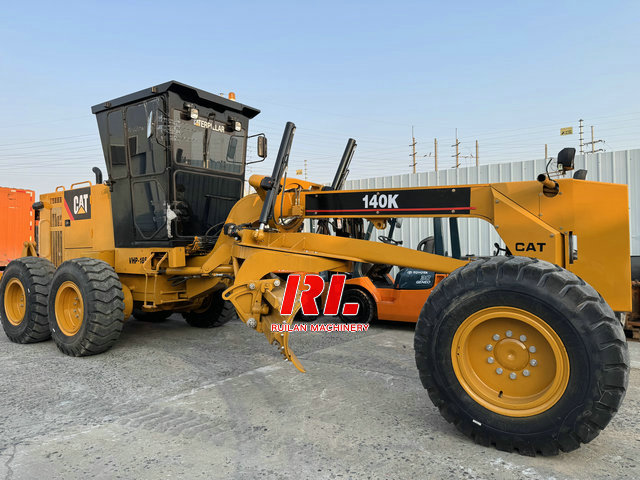
The secondary heavy equipment market categorizes machinery into three distinct tiers. Understanding these tiers prevents buyers from overpaying for superficial cosmetic updates.
Asset Category | Market Definition | Upfront Cost | Maintenance Risk Level |
|---|---|---|---|
Standard Used | Sold "as-is" showing all previous wear. No cosmetic enhancements or major parts replacements are guaranteed. | Lowest | Highest. Requires the most rigorous independent mechanical audit. |
Refurbished | Cosmetically repaired and functionally serviced. Fluids, filters, and common wear parts are replaced. Fresh paint is common. | Moderate | Medium. Extends lifecycle but may mask deeper foundational stress. |
Rebuilt / Certified Pre-Owned | Completely stripped and remanufactured to OEM tolerances. Defective components are entirely replaced. | Highest (Secondary Market) | Lowest. Typically backed by warranties and manufacturer-level guarantees. |
Do not confuse a refurbished machine for a rebuilt one. A fresh coat of paint easily hides structural fatigue. Always demand documentation detailing exactly what refurbishment processes occurred.
A visual walkaround is completely inadequate for assessing a grading machine. Mechanical precision relies on heavily stressed pivot points. Use this 6-point technical audit to uncover hidden wear.
The Circle and Pinion Gear: The circle dictates the entire functionality of the machine. Test the circle for full, unhindered rotation. Look closely for uneven wear on the pinion gear teeth. Mechanics sometimes stack shims to tighten a loose circle temporarily. Excessive use of shims serves as a major red flag. A misaligned or loose circle makes fine grading mathematically impossible.
The Moldboard and Cutting Edges: Inspect the primary blade for structural straightness. Look closely for hairline cracking along the weld lines. Check the replaceable cutting edge at the bottom. If previous owners allowed this edge to wear down into the moldboard itself, you face a major repair bill. Damaging the actual moldboard is a costly negligence indicator.
Frame Integrity and Alignment: Scrutinize the mainframe from front to back. Look for non-factory welding, "blowholes" in the weld seams, or the presence of "fishplates." Fishplates are external metal reinforcement plates welded over stress fractures. Amateur frame repairs signal historical overloading and guarantee future structural failure.
The Articulation Point: The hinge connecting the front and rear frames bears immense twisting forces. Use a visual indicator to check alignment. Stand back and look at the machine on flat ground. If the engine compartment sits visibly lower than the operator cab, the articulation joint is likely bent or severely compromised. Repairing this issue is highly capital-intensive.
Hydraulic Systems under Load: Do not just look at the hoses. Check the ground for static drips before starting the engine. Inspect cylinders and the circle drive housing for fluid weepage. After starting, test the blade controls. Erratic cylinder movement or hesitation during test operation indicates pressure loss or internal bypassing inside the pump.
Linkage and Front Axles: Graders lean their wheels to counteract side drafts from heavy loads. Assess the inner frame knuckles and front axles for stress fractures. Prolonged aggressive turning or improper load handling weakens these critical steering components over time.
Mechanical condition represents only half of the purchasing equation. Administrative and logistical risks routinely ruin equipment investments. You must secure clean documentation and guarantee future parts availability.
Demand comprehensive service histories from the seller. A well-maintained machine features a thick folder of fluid analysis reports and maintenance intervals. A lack of verifiable fluid changes and lubrication schedules serves as a leading indicator of premature component failure. Never trust verbal assurances regarding recent oil changes.
Scrutinize the official Receipt of Purchase. You must cross-reference the chassis serial number and engine serial number against national databases. This prevents you from accidentally acquiring stolen goods. Furthermore, verify the total absence of outstanding financial liens or insurance bonds attached to the machinery. A bank can legally repossess your newly purchased machine if the previous owner defaulted on their loan.
Ensure the specific make and model remains fully supported by the aftermarket. Orphaned legacy machines often carry highly attractive upfront price tags. However, they become permanent liabilities the moment a proprietary part fails. Call local parts distributors to confirm they still stock consumable items for the exact year and model you plan to purchase.
Where you buy dictates the level of support you receive after the funds transfer. The secondary market splits into private sellers and official dealer networks.
Sourcing from unvetted private sellers or heavy equipment auctions offers the lowest initial cost. However, it carries maximum risk. You receive zero post-sale support. All sales are final. This route proves suitable only if you employ dedicated heavy-diesel mechanics capable of performing exhaustive pre-purchase audits.
Partnering directly with a certified dealer or an authorized Used Grader manufacturer drastically changes the ownership experience. OEM-backed sourcing provides transparent, third-party inspection reports. You gain access to remanufactured parts guarantees and extended warranties. Furthermore, certified vendors offer modern technology integrations. They routinely supply telematics upgrades, such as aftermarket GPS grade control retrofits, tailored specifically to older models.
Evaluate the vendor’s infrastructure before signing. Ask questions regarding their ongoing preventative maintenance agreements. Confirm they maintain rapid parts dispatch capabilities within your operational region. True value stems from a vendor keeping your machine running, not just selling it.
Purchasing a used grading machine remains a strict exercise in risk management and technical validation. Prioritizing structural alignment over cosmetic appearances ensures you secure a reliable asset. You must verify the operational integrity of the circle, heavily inspect the hydraulics, and demand total legal transparency. These strict evaluations protect your project margins against catastrophic breakdowns.
Transition from passively browsing to actively evaluating. Request rigorous walkaround videos, independent oil sampling reports, and verified maintenance logs from authorized sellers. Relying on an established Used Grader provider gives you the aftermarket support required to keep projects moving flawlessly. Equip your team with accurate data, inspect without compromise, and invest in machinery engineered to perform.
A: Engines often require major overhauls around 10,000 to 12,000 hours. However, the condition of the frame, circle, and transmission remains far more critical than the hour meter alone. A 6,000-hour machine suffering from poor maintenance proves riskier than a 10,000-hour machine boasting meticulous service logs.
A: Yes. Many tier-brand older models accommodate aftermarket 2D or 3D machine control systems. However, the machine’s hydraulic valves must remain highly responsive and in excellent condition. Sluggish hydraulics cannot interpret the rapid micro-adjustments dictated by modern grading software.
A: Structural frame repairs combined with a lack of formal maintenance documentation serve as the ultimate red flag. Finding welded fishplates indicates the machine suffered stress beyond its engineered limits. Lacking preventative care records guarantees internal components are equally degraded.
A: For enterprise buyers focused on minimizing downtime, yes. Without routine fluid analysis and verifiable service logs, you cannot predict the remaining lifecycle of the transmission and hydraulic pumps. This lack of data makes long-term cost calculations pure guesswork.

