

close
Choose Your Site
Global
Social Media
Views: 0 Author: Site Editor Publish Time: 2026-05-11 Origin: Site


Acquiring heavy equipment often involves a delicate financial balancing act. Purchasing a Used Grader minimizes upfront capital and bypasses rapid new-equipment depreciation. However, it also introduces the risk of inheriting costly mechanical liabilities.
Successful procurement requires looking past aesthetic refurbishments and low hour-meter readings. You must focus intensely on structural integrity, historical maintenance data, and overall operational expenses. Ignoring these hidden factors can quickly drain your equipment budget and halt critical project timelines.
This guide provides a rigorous, mechanic-approved evaluation framework. We will help you shortlist and inspect machines effectively. You will learn exactly what to look for when evaluating equipment for heavy civil, road building, or municipal applications.
Match Size to Site: Choose blade length (typically 12 to 24 feet) and frame type (articulated vs. rigid) based on spatial constraints and required pass efficiency, not just horsepower.
Inspect the "Triangle of Expense": The circle, moldboard, and articulation joints are the most expensive repair areas; excessive play or unauthorized structural welding here are primary dealbreakers.
Test Before Trusting: Never evaluate a warm machine. Mandate a cold start and a brief load test to expose hidden transmission lag and hydraulic pressure failures.
Prioritize Maintenance Over Hours: A high-hour machine with meticulous service records and current parts availability offers a safer ROI than a low-hour unit with undocumented history.
Purchasing excess capacity wastes fuel and bloats your transport budget. Moving oversized machinery between job sites often requires costly special permits. Conversely, under-sizing leads to excessive pass counts. This forces the operator to overwork the machine, causing premature engine wear. You must define your exact job site parameters before reviewing local inventory.
Modern equipment relies heavily on specific frame designs to maximize efficiency. You will generally choose between articulated frames and traditional rigid setups. Articulated frames feature a central pivot point. They offer incredibly tight turning radii. This makes them ideal for cul-de-sacs, urban roadwork, and navigating confined municipal sites. Traditional rigid or tandem setups lack this center pivot. They excel in straight-line stability, making them optimized for long-haul highway grading and expansive open-pit mining operations.
Horsepower alone does not dictate grading capability. You must correlate the machine's operating weight with its blade size. Lighter machines lack the traction needed to push massive loads, while heavy machines overwhelm smaller blades.
Common Weight to Blade Size Correlations | ||
Operating Weight Class | Typical Blade Length | Primary Application |
|---|---|---|
30,000 - 36,000 lbs | 12 feet | Residential streets, fine grading, landscaping |
40,000 - 48,000 lbs | 14 feet | County roads, medium commercial sites, snow removal |
60,000+ lbs | 16 feet | Highway construction, heavy earthmoving |
160,000+ lbs | 24 feet | Mining operations, massive infrastructure projects |
Always assess auxiliary attachment compatibility. If you operate in northern climates, verify compatibility for front snow plows. If you tackle hardpack soil, ensure the frame supports rear rippers or scarifiers without overstressing the hydraulic system.
When evaluating physical condition, focus on the areas where wear translates to the highest replacement costs. Project downtime destroys profitability faster than routine service bills. A strategic inspection targets the structural elements.
The circle dictates grading precision. Check the circle for uneven gear wear and damaged pinion teeth. Mechanics often use shims to tighten a loose circle. While standard shimming is acceptable, excessive use of shims attempts to hide severe alignment issues. This requires an immediate replacement.
Next, inspect the moldboard cutting edges. Worn cutting edges represent cheap, routine maintenance. However, a warped or center-dished moldboard indicates severe abuse. Replacing an entire moldboard requires expensive structural replacement. Lay a straight edge across the face of the blade to check for bowing.
Frame integrity is non-negotiable. Scrutinize the center pivot and main frame for structural cracks. Look closely for "fishplates" (aftermarket reinforcement plates welded over cracks). If you spot them, evaluate the welding quality to determine if a certified professional performed the repair or if it was a desperate quick fix.
Use these skeptical checks to identify hidden alignment red flags:
The Sagging Engine Check: Step back and look at the machine's profile. If the engine compartment sits visibly lower than the cab, you are looking at a bent articulation point. This is a severely expensive repair.
The Tire Wear Check: Inspect all tires for uneven tread wear. While worn tires seem like a simple consumable expense, uneven wear patterns often point to deeper frame misalignment.
The Pivot Pin Check: Look for excessive grease buildup mixed with metal shavings around the articulation pins. This indicates severe internal grinding.
Perform a meticulous visual sweep. Look for cylinder weeping, degraded rubber hoses, and fresh oil puddles on the ground. A freshly washed machine might look appealing, but it easily hides slow leaks.
Implementation Reality: Demand a "cold start." Testing the equipment under load while cold is the only reliable way to detect underlying issues. Warm fluids mask mechanical hesitation. To execute a proper cold start test, follow these steps:
Touch the engine block to verify it is completely cold before turning the key.
Observe the exhaust smoke upon startup. Heavy white or blue smoke indicates failing injectors or engine blowby.
Engage the transmission immediately. Hidden transmission slippage is most obvious before the hydraulic fluid reaches operating temperature.
Cycle the moldboard through its full range of motion to test for hydraulic pressure lags.
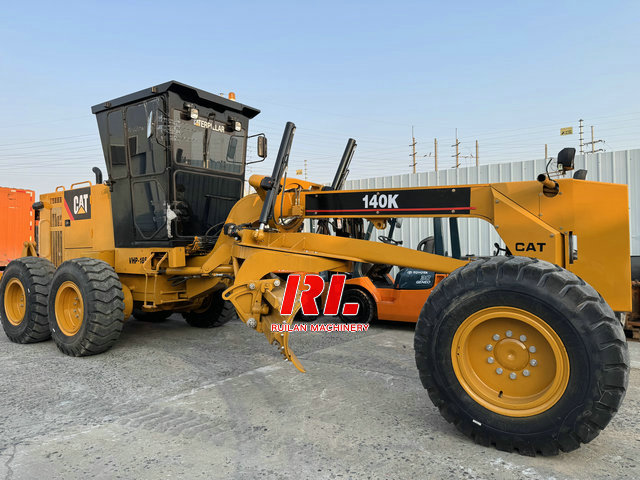
Buyers often fall into a common fallacy. They rely solely on low operating hours to gauge equipment health. Hours only tell part of the story. Environmental conditions and operator habits impact component life far more than time alone.
A machine logging 10,000 hours on a flawless, documented preventative maintenance (PM) schedule often represents a safer investment than a 5,000-hour machine lacking paperwork. Consistent oil sampling and fluid changes prevent catastrophic wear. When reviewing a service log, look for strict adherence to OEM recommended intervals. If previous owners skipped hydraulic filter changes, the internal valves likely suffered irreversible scoring. Verified service history provides tangible proof of internal component health.
Older models offer enticing discounts. However, purchasing an obsolete unit carries immense risk. You must highlight the risk of purchasing discontinued models. Ensure aftermarket or OEM parts remain readily available in your geographic region. Waiting six weeks for a proprietary transmission gear shipped from overseas will cause catastrophic downtime. Always verify local dealer inventory for consumable parts before committing to a vintage machine.
Modern project bids often require strict environmental compliance and advanced technological integration. Bidding on government or municipal contracts frequently mandates modern emission standards. Scalability depends on your fleet's capability to meet these modern demands.
You must assess the condition of exhaust aftertreatment systems on modern used machines. Systems like Diesel Particulate Filters (DPF) and Diesel Exhaust Fluid (DEF) modules require specific maintenance cycles. Improper maintenance of these systems often leads to engine derating. When an engine derates, it forcefully restricts horsepower to prevent emission violations. Ask the seller for the DPF ash-cleaning history. Replacing a clogged DPF unit can cost thousands of dollars unexpectedly.
Evaluate whether the used unit arrives pre-wired for automated grade control. Systems like Cat Grade or John Deere SmartGrade transform machine capability. Integrating 3D grading tech drastically reduces pass counts. It minimizes fuel burn and eliminates the need for manual grade checkers on the ground. This technology creates a rapid ROI that easily justifies a slightly higher initial purchase price. Furthermore, built-in telematics allow you to track fuel consumption and schedule predictive maintenance remotely.
A heavy machine is only as reliable as the network supporting it. Sourcing equipment requires vetting both the builder and the seller. Establishing a solid support foundation prevents prolonged project delays.
Choosing a top-tier Used Grader manufacturer directly impacts the machine's residual resale value. Premium brands engineer their frames with thicker steel tolerances and higher quality hydraulic pumps. Furthermore, major manufacturers guarantee access to a robust local parts network. When a hydraulic line bursts in the middle of a paving job, knowing your local supplier stocks the exact replacement part is invaluable.
Where you buy matters just as much as what you buy. You face a distinct choice between certified dealers and private sellers.
Certified Dealer vs. Private Seller Comparison | ||
Evaluation Metric | Certified Dealer Network | Private Seller / Auction |
|---|---|---|
Warranties | Often includes 30-90 day powertrain coverage. | Strictly "As-Is" with no post-sale recourse. |
Documentation | Provides detailed fluid analysis and PM logs. | Paperwork is often sparse or completely missing. |
Financing | Offers in-house financing and leasing options. | Requires upfront cash or independent bank loans. |
Inspection Access | Allows thorough mechanic inspections and load testing. | Rushed timelines; often restricts cold-start tests. |
Purchasing through certified dealer networks reduces your exposure to fraud and mechanical failures. They provide fluid analysis reports and structural guarantees. Buying "as-is" from private sellers or auctions carries significant risk. We strongly recommend bringing an independent, certified heavy-equipment mechanic for final verification before closing any deal. A trained mechanic will spot painted-over rust and hidden hydraulic weeping quickly.
Securing a reliable machine requires a disciplined procurement mindset. Focus on minimizing long-term operational expenses rather than hunting for the absolute lowest sticker price. A cheap purchase often translates into staggering repair bills.
Reiterate the importance of verifying structural integrity. Carefully checking the frame, circle, and articulation joint will save you tens of thousands of dollars in post-purchase repairs. Do not let fresh paint distract you from examining wear plates and pivot pins.
Before entering the market, outline your exact job site specs and required blade dimensions. Request detailed maintenance logs from vetted dealers. Finally, always schedule an on-site, cold-start inspection to uncover hidden mechanical faults. Protecting your investment starts with demanding full transparency from the seller.
A: The articulation joint, the circle assembly, and the transmission are the most expensive repairs. A bent articulation joint requires massive structural labor. Rebuilding a heavily worn circle or replacing a slipping transmission can quickly exceed tens of thousands of dollars in parts and mechanic fees.
A: Generally, exceeding 10,000 hours is considered high. However, component life depends entirely on maintenance intervals and application severity. A highway machine with 12,000 hours and perfect fluid maintenance often outlasts a 6,000-hour machine used brutally in rocky terrain without proper service.
A: You should match the specification to your application. Prioritize a larger blade (16 to 24 feet) for high-volume open-area projects like highway construction. Choose better maneuverability, such as an articulated frame with a 12-foot blade, for tight urban developments and residential cul-de-sacs.

