

close
Choose Your Site
Global
Social Media
Views: 0 Author: Site Editor Publish Time: 2026-10-15 Origin: Site


Scaling a construction fleet requires a delicate balancing act. You must weigh upfront capital expenditure against the operational risks of machine downtime. Finding the right equipment can dictate your project margins. The "medium" class, typically ranging from 15 to 25 tons, stands out as the industry sweet spot. These machines deliver exceptional versatility. They perfectly bridge the gap between tight-access mini excavators and massive heavy-duty earthmovers.
Searching for a reliable Medium used Excavator is a smart strategic asset play. However, buyers must know how to evaluate structural wear and historical maintenance logs. This article strips away marketing fluff. We provide a hard-numbers look at the top five models dominating the secondary market. You will learn how to evaluate true market pricing, avoid hidden repair costs, and understand the daily ownership realities of these essential workhorses.
Pricing Baseline: The average used excavator price in the medium tier varies sharply based on the 4,000-to-8,000 operating hour threshold.
Top Performers: Cat 320 holds residual value, Komatsu PC200 leads in fuel efficiency, and Doosan/Develon offers the strongest upfront price-to-performance ratio.
Risk Mitigation: The true cost of a used machine isn't the sticker price; it’s the condition of the hydraulic pumps, undercarriage, and emissions compliance (EPA tiers).
Decision Matrix: Brand selection must heavily index on local dealer network proximity and aftermarket parts availability, not just brand loyalty.
Comparing used equipment requires a standardized baseline. Without one, you easily fall into "apples-to-oranges" evaluation traps. Two machines showing identical hours on the meter can possess vastly different remaining lifespans. You must look beyond the basic model number and dig into the machine’s operational past.
Operating hours only tell half the story. The application history matters just as much. A machine logging 6,000 hours tearing through rocky, abrasive terrain experiences severe structural stress. Conversely, an excavator spending 6,000 hours doing soft soil trenching or light grading retains much more component life. Understanding how an application history impacts the final Used Excavator price is crucial for accurate financial forecasting.
When inspecting potential purchases, always focus on the "Big Three" inspection zones:
Undercarriage Wear: Measure the chains, sprockets, idlers, and bottom rollers. Replacing a 20-ton machine's undercarriage requires significant capital.
Hydraulic System Integrity: Check for weeping cylinders, valve bank leaks, and unusual pump whine under load. The hydraulics are the lifeblood of the excavator.
Engine Health: Look for excessive blow-by from the crankcase. Always mandate a scheduled fluid analysis to detect internal metal shavings.
Finally, factor in compliance and regulations. Regional EPA emission tiers dictate where you can legally operate certain used models. A Tier 3 engine might be cheap, but municipalities or government job sites often require Tier 4 Final compliance. Buying a non-compliant machine severely limits your bidding potential.
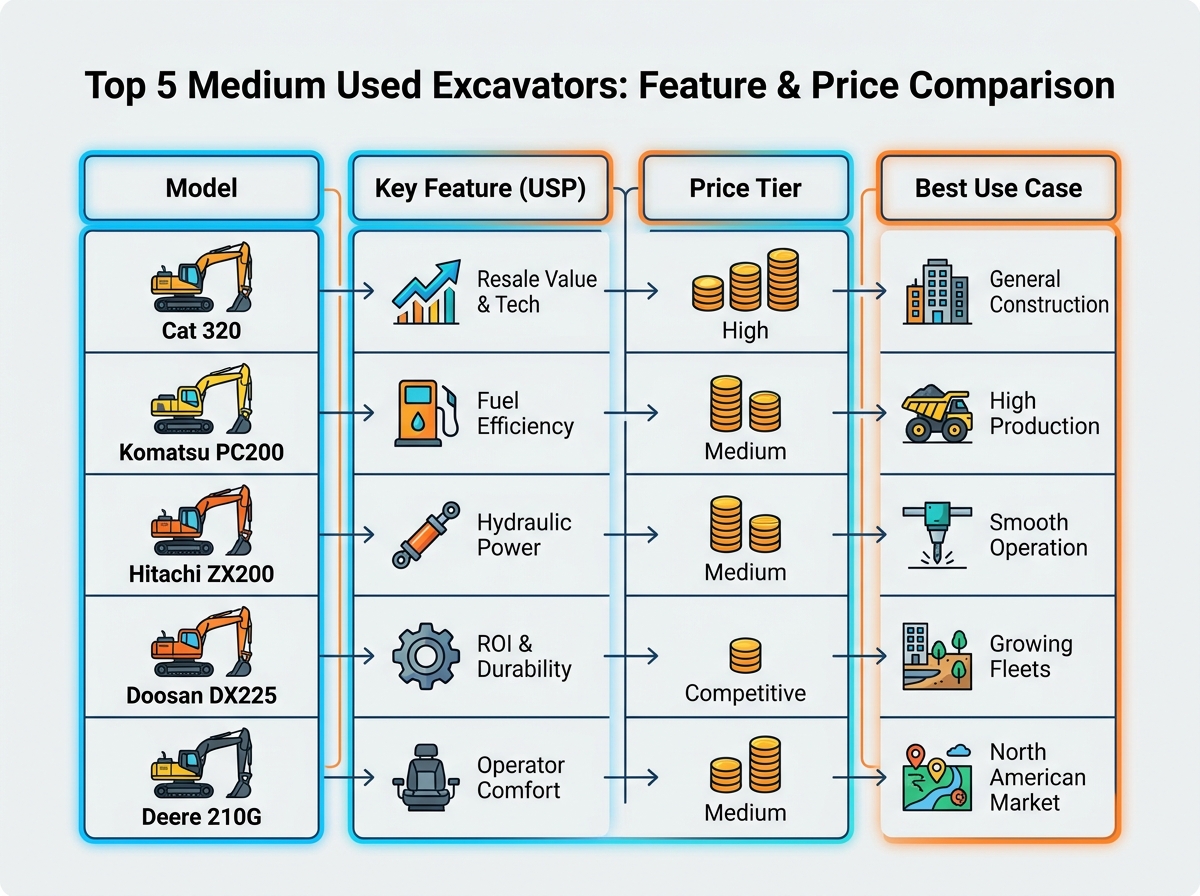
We evaluated the top five models in the 15-to-25-ton category. Below, you will find breakdowns of their core strengths, historical reliability, and estimated pricing baselines.
The Caterpillar 320 remains the gold standard in the mid-size tier. If you want a reliable Medium used Excavator that holds its value, this model consistently delivers. Newer used models feature factory-integrated technology like Cat Grade and Payload systems. These additions drastically improve operator efficiency and fuel management on busy sites.
The primary advantage is unmatched aftermarket support. Cat parts are universally accessible. The machine boasts an incredibly slow depreciation curve. However, you will pay the highest upfront premium compared to other brands.
Caterpillar 320 Specifications Matrix
Metric | Data Details |
|---|---|
Estimated Price Range (3k-6k hours) | $110,000 - $155,000 |
Key Specifications | 50,000 lbs Operating Weight / 172 HP |
Best Use Case | Heavy earthmoving, high-tech precision grading |
Komatsu engineering focuses heavily on operational economy. The PC200 and its modern PC210 counterpart utilize a highly refined closed-center load-sensing hydraulic system. This system delivers precise control while yielding massive fuel savings over long shifts. Operators love the smooth, predictable boom responses.
Komatsu engines offer extremely durable lifespans. They frequently run past the 10,000-hour mark before needing major rebuilds. While cab comfort historically leans toward the utilitarian side, the mechanical reliability keeps fleet managers loyal to the brand.
Komatsu PC200 (PC210) Specifications Matrix
Metric | Data Details |
|---|---|
Estimated Price Range (3k-6k hours) | $95,000 - $135,000 |
Key Specifications | 49,000 lbs Operating Weight / 165 HP |
Best Use Case | General construction, fuel-sensitive operations |
Hitachi excavators command deep respect for their hydraulic dominance. The acclaimed HIOS III hydraulic system allows operators to perform smooth, multifunction cycle times without power drop-offs. When swinging, lifting, and curling simultaneously, the ZX200 rarely bogs down.
The reliability is excellent across the board. Parts availability remains strong globally. However, regional dealer network density can vary. You must confirm local service options before purchasing.
Hitachi ZX200 (ZX210) Specifications Matrix
Metric | Data Details |
|---|---|
Estimated Price Range (3k-6k hours) | $90,000 - $130,000 |
Key Specifications | 48,500 lbs Operating Weight / 164 HP |
Best Use Case | Utility trenching, fast-cycle production loading |
Doosan, recently rebranded as Develon, aggressively challenges the premium brands. The DX225 features an incredibly robust build and utilizes the e-EPOS (Electronic Power Optimizing System). This system seamlessly syncs engine output to hydraulic demand, minimizing waste.
You benefit from a noticeably lower initial acquisition cost. The trade-off is a slightly steeper depreciation curve. This characteristic makes the DX225 an ideal long-term keep for growing fleets aiming to maximize upfront capital.
Doosan DX225 Specifications Matrix
Metric | Data Details |
|---|---|
Estimated Price Range (3k-6k hours) | $80,000 - $115,000 |
Key Specifications | 52,000 lbs Operating Weight / 174 HP |
Best Use Case | Long-term fleet integration, budget-conscious scaling |
The John Deere 210G shares a core architectural lineage with Hitachi, ensuring exceptional hydraulic reliability. Deere differentiates itself through heavy investments in the operator experience. The cab provides expansive visibility, highly ergonomic controls, and excellent climate management.
Mechanics favor the 210G for its easy-access ground-level maintenance banks. In the North American market, parts access is virtually unrivaled. The robust dealer network ensures you rarely wait long for critical components.
John Deere 210G Specifications Matrix
Metric | Data Details |
|---|---|
Estimated Price Range (3k-6k hours) | $95,000 - $135,000 |
Key Specifications | 49,200 lbs Operating Weight / 159 HP |
Best Use Case | Residential development, owner-operator businesses |
Many buyers focus exclusively on the initial invoice. However, evaluating a Used Excavator price must include projected maintenance over the next 24 months. A machine saving you $15,000 at auction quickly becomes a financial burden if it requires an immediate pump replacement.
Understanding the depreciation curve gives you a distinct financial advantage. Buying a 3-to-5-year-old machine helps you avoid the steepest initial depreciation hit. Let someone else absorb the new-machine premium. You capture the asset during its most productive, cost-effective window.
Parts and service scalability heavily influence long-term success. A lower-priced tier-two brand becomes a massive liability if parts take weeks to ship. Project delays cost thousands of dollars per day in lost productivity and penalties. Always ensure your chosen brand enjoys strong regional support. Fast parts access keeps your tracks turning and your operators working.
The secondary market features thousands of attractive online listings. Be highly skeptical of unusually cheap equipment. If the price seems too good, sellers are likely hiding severe mechanical flaws. We highly recommend adopting a defensive buying posture.
Undercarriage Blindspots: Many buyers underestimate track wear. Replacing a completely worn undercarriage on a 20-ton machine runs upwards of $10,000 to $15,000. This repair immediately wipes out any initial purchase savings you thought you secured.
Aftermarket Component Risks: Avoid machines patched together using incompatible aftermarket hydraulic components. Cheap pumps or poorly machined valves compromise system pressure. They cause sluggish cycle times and generate excess heat, leading to cascading failures.
Emissions Bypass Tricks: Watch out for disabled DEF (Diesel Exhaust Fluid) systems. While an "emissions delete" might seem like a way to avoid sensor headaches, it renders the machine illegal on many commercial and municipal job sites.
Moving from evaluation to final purchase requires a structured framework. Start by narrowing your options down to machines residing within a 200-mile radius. Proximity allows you or a trusted mechanic to perform an in-person physical inspection.
Always demand third-party verification. Strongly advocate for independent mechanical inspections. Before signing any contract, request recent SOS (Scheduled Oil Sampling) fluid analysis results. Fluid analysis acts like a blood test for heavy machinery. It reveals microscopic wear metals in the engine, final drives, and hydraulic systems long before catastrophic failure occurs.
Finally, explore used equipment financing and warranty options. Many reputable dealers offer attractive financing rates for certified used inventory. Securing a dealer-backed extended powertrain warranty on used models provides tremendous peace of mind. It shields your working capital from sudden, massive repair bills during the critical first year of ownership.
The best Medium used Excavator is the one that aligns with your specific job site application and local dealer support network. It is rarely just the machine carrying the cheapest sticker price. You must weigh immediate acquisition costs against long-term operational readiness.
We remind buyers to prioritize maintenance records over brand aesthetics. A slightly scratched excavator boasting perfect service logs will always outperform a freshly painted machine hiding worn internal components. Make evidence-based purchasing decisions.
Take action today by browsing vetted equipment inventories. Request machine-specific spec sheets, ask for maintenance histories, and contact equipment sales teams for a custom machine evaluation. Securing the right excavator ensures your fleet remains versatile, productive, and highly profitable.
A: The 8,000 to 10,000-hour threshold is generally where major components require rebuilding. Engines and hydraulic pumps often near the end of their first lifecycle in this range. If a machine has passed 10,000 hours, expect lower reliability unless the seller provides documentation of major component overhauls.
A: Prices typically drop during late winter when construction slows down. Conversely, demand spikes in early spring, driving prices up. End-of-year tax incentives often prompt companies to sell older fleet units, creating temporary surges in auction inventory and favorable buyer pricing.
A: Both are excellent choices. Choose Cat if you prioritize high resale value, operator familiarity, and dense parts availability. Opt for Komatsu if your operations prioritize maximum fuel economy and you want an exceptionally durable, long-lasting engine architecture.


